




Short-form video has changed the way businesses reach, persuade, and retain customers. Platforms such as TikTok, Instagram Reels, and YouTube Shorts have shifted consumer attention away from long-format content and toward fast, visual, and highly personalized media. For brands, this shift is not a passing trend. It is a structural change in how purchase decisions are formed, and understanding it is essential for any business building modern video marketing strategies.
What Is Short Video Marketing?
Short video marketing is the practice of using brief, algorithm-driven video content, most commonly under 90 seconds, to build brand awareness, demonstrate products, and drive conversions across platforms such as TikTok, Instagram Reels, and YouTube Shorts. Unlike traditional video advertising, short-form content is built around algorithmic discovery rather than direct search. This means a consumer does not need to look for a product to encounter it. The content finds them, based on behavioral signals such as watch time, likes, shares, and rewatches.
There is no single fixed rule for what length is considered a short video, but most marketers and platforms treat anything under 60 to 90 seconds as short-form, with the strongest-performing content typically sitting between 15 and 30 seconds.
This distinction matters because it changes the marketing funnel itself. Awareness now frequently happens before intent, rather than after it. A consumer may develop interest in a product category purely through repeated exposure to short-form content, long before they open a search engine or visit a retailer’s website.
The Psychological Drivers Behind Consumer Response
Several behavioral factors explain why short-form video is so effective at influencing purchase decisions.
Reduced Cognitive Load
Short-form video communicates a message in seconds, which lowers the mental effort required to process information. Lower cognitive load increases the likelihood that a message is retained and acted upon, particularly for impulse-driven categories such as fashion, beauty, food, and consumer electronics.
Social Proof at Scale
Comment sections, share counts, and duet or stitch features expose viewers to the reactions of other consumers in real time. This visible social validation functions as a modern form of word-of-mouth marketing, often carrying more weight with audiences than traditional advertising claims.
The Parasocial Effect
Creators and influencers build a sense of familiarity with their audience through consistent, casual, and authentic-feeling content. This parasocial relationship increases trust, and trust is one of the strongest predictors of conversion. Recommendations delivered through a familiar creator typically outperform brand-produced advertising in both engagement and recall.
The Fear of Missing Out (FOMO)
Trends move quickly on short-form platforms. Products that go viral often sell out or gain visible cultural momentum within days. This urgency taps directly into FOMO, prompting faster purchase decisions than would occur through slower-moving marketing channels.
Measurable Shifts in Consumer Behavior
The influence of short-form video is not theoretical. It shows up consistently across measurable consumer behavior patterns.
- Search behavior is changing. A growing share of younger consumers now use platforms like TikTok as a discovery and research tool ahead of, or instead of, traditional search engines, particularly for product reviews, comparisons, and recommendations.
- Purchase cycles are shortening. The gap between first exposure to a product and the decision to buy has compressed, driven by in-app shopping features and one-tap checkout integrations.
- Trust is shifting toward creators over brands. Consumers increasingly weigh creator opinion above brand messaging, which has direct implications for how marketing budgets should be allocated.
- Attention spans are shorter, but engagement is deeper. While individual video length has dropped, total time spent per user on short-form platforms has increased, meaning brands have more total exposure opportunities, provided the content earns attention within the first few seconds.
Short-Form vs Long-Form Video: Key Differences
Understanding how short video marketing differs from long-form video helps determine where each format belongs within a broader strategy. Long-form video, such as detailed product demonstrations, webinars, or in-depth tutorials, suits considered purchases where the audience is already interested and needs depth of information to decide. Short-form video, by contrast, is built for discovery. It operates earlier in the funnel, capturing attention from consumers who were not actively searching, relying on speed, personality, and visual impact rather than detailed explanation.
Is short video marketing effective for all industries? Not equally. Product-led, visually demonstrable categories such as fashion, beauty, food and beverage, fitness, and consumer technology tend to see the strongest results, since these products lend themselves to quick visual storytelling. B2B, professional services, and regulated industries such as finance or healthcare can still use short-form video effectively but generally need a more educational or trust-building angle rather than a purely entertainment-led one, and results tend to build more gradually.
Which Platforms Are Best for Short Video Marketing?
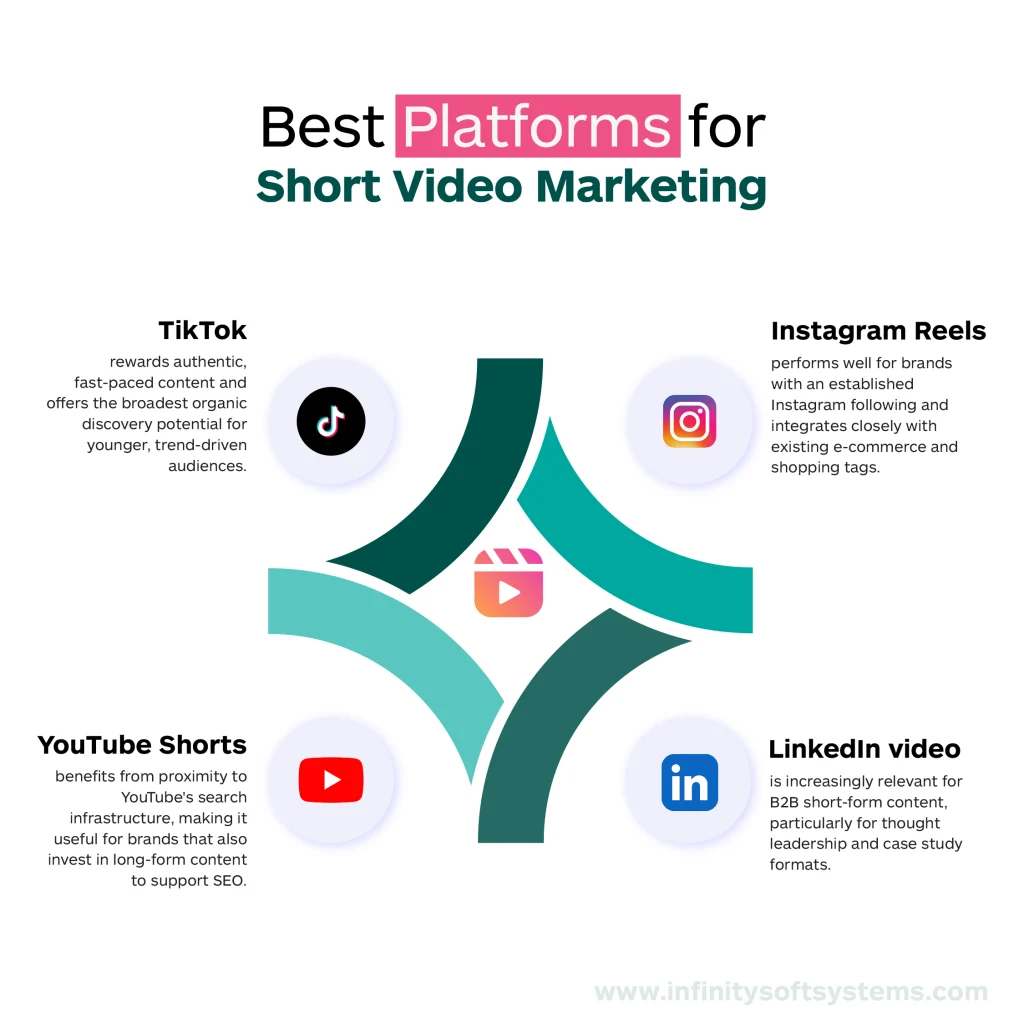
The right platform depends on where the target audience spends time and how the product is best demonstrated.
- TikTok rewards authentic, fast-paced content and offers the broadest organic discovery potential for younger, trend-driven audiences.
- Instagram Reels performs well for brands with an established Instagram following and integrates closely with existing e-commerce and shopping tags.
- YouTube Shorts benefits from proximity to YouTube’s search infrastructure, making it useful for brands that also invest in long-form content to support SEO.
- LinkedIn video is increasingly relevant for B2B short-form content, particularly for thought leadership and case study formats.
Most effective strategies do not rely on a single platform. They adapt the same core message to the format and audience expectations of each channel.
What Tools Can I Use for Short Video Marketing?
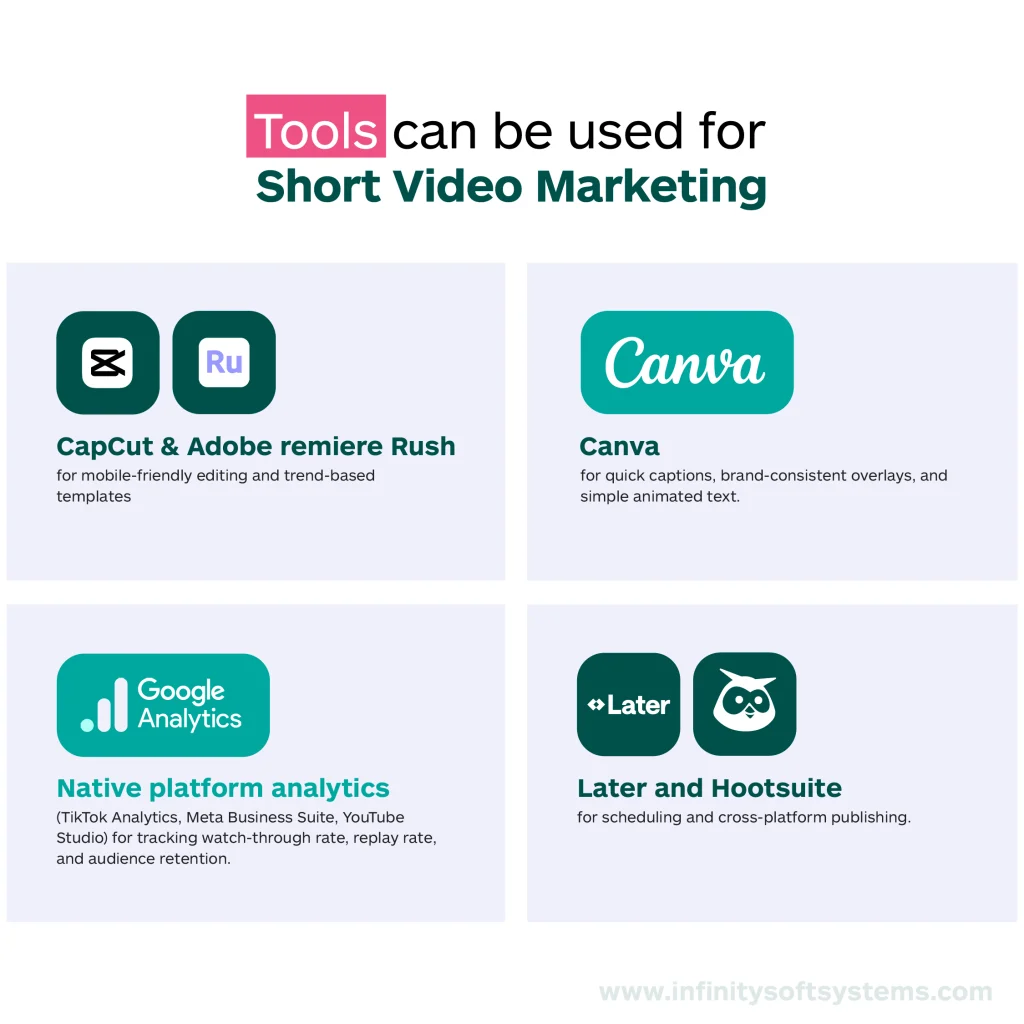
A number of tools support the production, editing, and distribution of short-form video at scale:
- CapCut and Adobe Premiere Rush for mobile-friendly editing and trend-based templates.
- Canva for quick captions, brand-consistent overlays, and simple animated text.
- Later and Hootsuite for scheduling and cross-platform publishing.
- Native platform analytics (TikTok Analytics, Meta Business Suite, YouTube Studio) for tracking watch-through rate, replay rate, and audience retention.
The right toolset depends on production volume and in-house resourcing, but consistency of output matters more than the specific software used.
Successful Short Video Marketing Examples: What They Have in Common
Rather than being tied to any single format, successful short video marketing examples tend to share several patterns. They open with a visual or verbal hook within the first two seconds. They use text overlays for viewers watching without sound. They lean on relatable or humorous framing rather than polished advertising language. They end with a single, clear action, such as visiting a link in bio or checking a product page. Brands that study top-performing videos within their own category, rather than copying viral trends directly, tend to produce content that fits platform norms while still reinforcing their own brand identity.
Implications for Digital Marketing Strategy
For businesses building a digital marketing strategy in 2026, short-form video should not be treated as a supplementary channel. It requires dedicated strategic planning, aligned with SEO, paid media, and content marketing rather than run in isolation.
Content Must Be Native to the Platform
Repurposed television advertisements or overly polished brand content tend to underperform. Short-form platforms reward content that feels native to the feed, meaning authentic, fast-paced, and often unscripted in tone.
SEO and Short-Form Video Now Intersect
Video captions, on-screen text, and audio transcripts are increasingly indexed and surfaced in search results, including within AI-generated answers and Google’s video-rich results. Optimizing short-form video with keyword-relevant captions, structured hooks, and clear calls to action supports discoverability across both social platforms and traditional search.
Data Should Guide Creative Decisions
Watch-through rate, replay rate, and share rate are stronger indicators of performance than impressions or likes alone. Businesses that treat short-form video as a testable, data-driven channel, rather than a purely creative one, consistently see stronger returns on investment.
Consistency Outperforms Virality
While viral moments generate short-term spikes, sustained posting frequency builds the algorithmic trust needed for consistent reach. A structured, always-on content cadence typically outperforms sporadic, high-production attempts at going viral.
How to Create Short Video Marketing Content That Converts
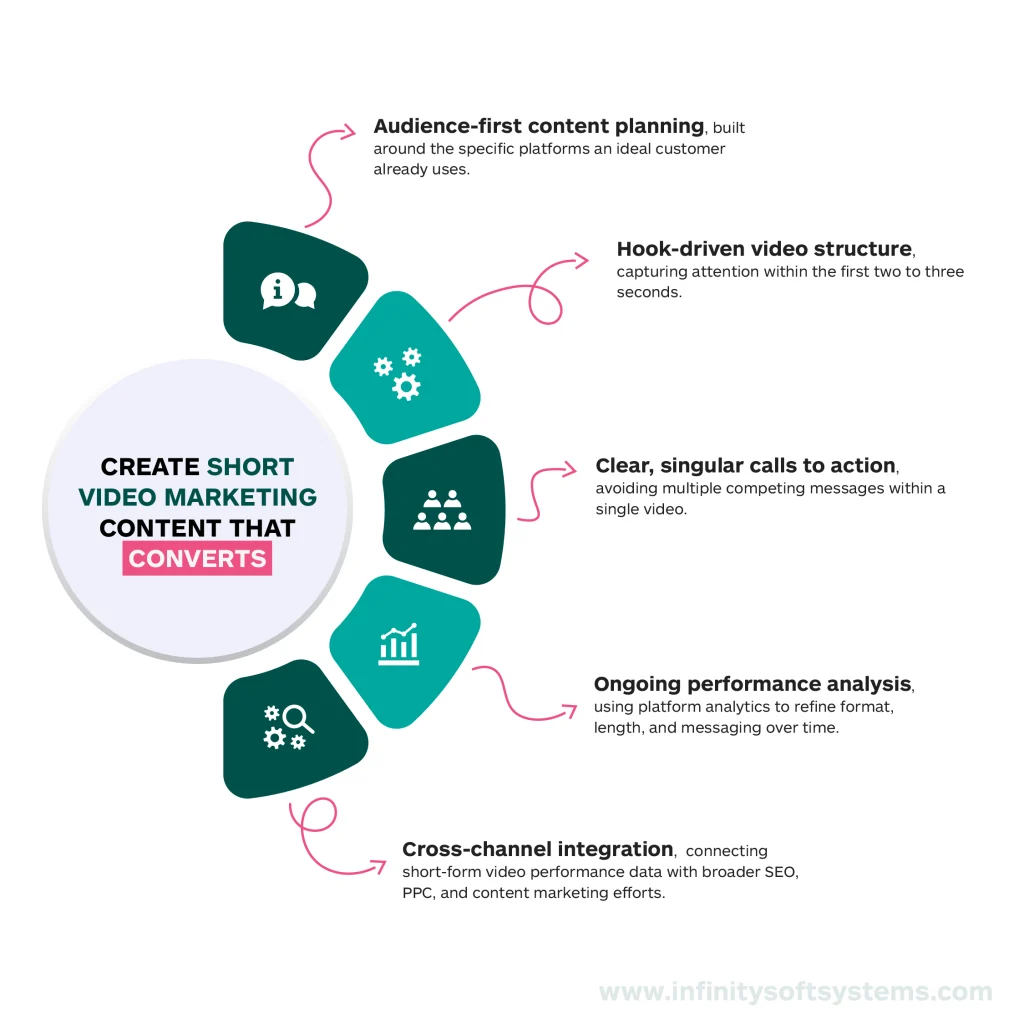
Businesses asking how to create short video marketing content that actually drives results should build their approach around the following elements:
-
-
- Audience-first content planning, built around the specific platforms an ideal customer already uses.
- Hook-driven video structure, capturing attention within the first two to three seconds.
- Clear, singular calls to action, avoiding multiple competing messages within a single video.
- Cross-channel integration, connecting short-form video performance data with broader SEO, PPC, and content marketing efforts.
- Ongoing performance analysis, using platform analytics to refine format, length, and messaging over time.
-
Frequently Asked Questions About Short Video Marketing
What Are the Benefits of Short Video Marketing?
Short video marketing offers faster audience reach through algorithmic discovery, lower production costs compared to traditional advertising, stronger emotional connection through creator-led content, and measurable performance data that allows strategies to be refined quickly. It also supports SEO indirectly, since captions and on-screen text are increasingly surfaced within search results.
How Effective Is Short Video Marketing?
Effectiveness depends on execution rather than the format alone. Businesses that treat short-form video as a testable, data-driven channel, supported by clear hooks, consistent posting, and platform-native content, typically see measurable gains in awareness, engagement, and conversion. Businesses that repurpose traditional advertising without adapting to platform norms tend to see weaker results.
Can Short Video Marketing Increase Engagement?
Yes. Features such as comments, shares, duets, and stitches are built to encourage interaction, and the format’s brevity increases the likelihood a viewer watches to completion or rewatches the content. Both behaviors signal quality to the platform’s algorithm, which in turn increases distribution and further engagement.
Conclusion
Short-form video content has fundamentally altered how consumers discover products, build trust in brands, and make purchase decisions. It has compressed the marketing funnel, elevated the influence of creators over traditional advertising, and introduced new behavioral triggers rooted in urgency and social proof. Businesses that integrate short-form video into a coordinated digital marketing strategy, supported by data and aligned with SEO and paid media efforts, are best positioned to convert this shift in consumer attention into measurable, sustainable growth.